
For the Person Who Appoints: A Guide for Advisers
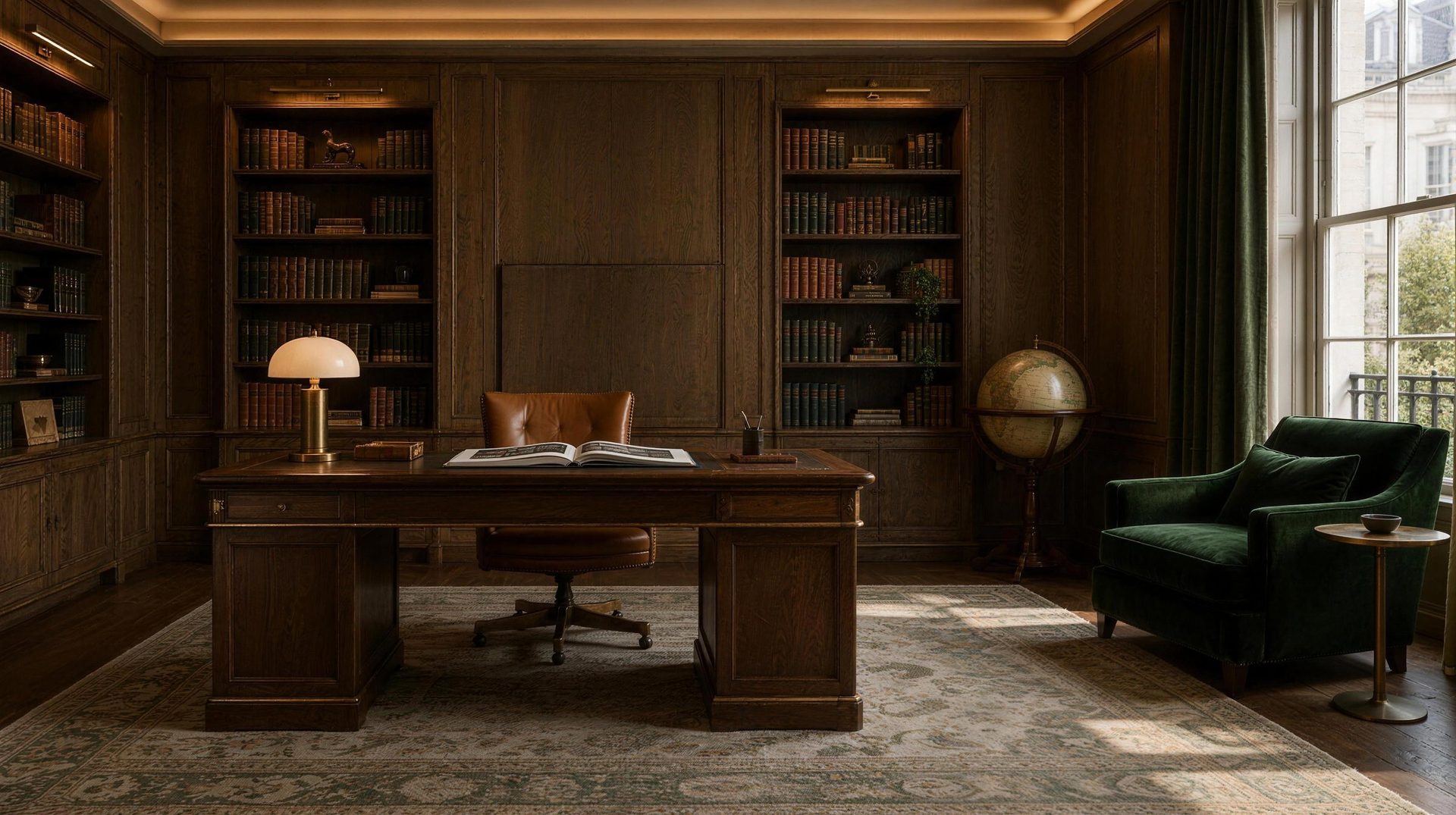
Some of our clients call us their personal property development arm. The phrase usually comes from the people who work for them. This piece is for those people.
The person who appoints the design firm is often not the person who will live in the house. It may be a family office director, a chief of staff, a buying agent or a lawyer. They act for a principal who may see the project a handful of times before it is finished, and who will judge it for the rest of their life.
Over nearly four decades, our clients have included captains of industry, elite sportsmen and women, and figures from entertainment, as Country & Town House has noted. Their identities stay private, and many of our most important relationships have been with their advisers. What follows is what we would want to know if we sat on your side of the table.
Judge the delivery, not the photographs
Every serious firm has a beautiful portfolio. Photographs tell you about taste. They tell you nothing about whether the programme held, whether the budget was honest, or how the firm behaved when a principal changed their mind in month fourteen.
So ask different questions. Ask to speak to the advisers of former clients, not just the clients. Ask to see a real monthly cost report and a real programme, anonymised. Ask who will lead the project day to day, and meet them before you appoint.
At the end of one long project, a principal’s family office director told us that the most valuable thing we had produced wasn’t a drawing. It was a single page we sent her every month: the decisions we needed from the principal, the date we needed each one, and what it would cost in time if it came late. She could brief him in ten minutes on a call from wherever he happened to be, and nothing ever sat waiting in anyone’s inbox.
Count the appointments
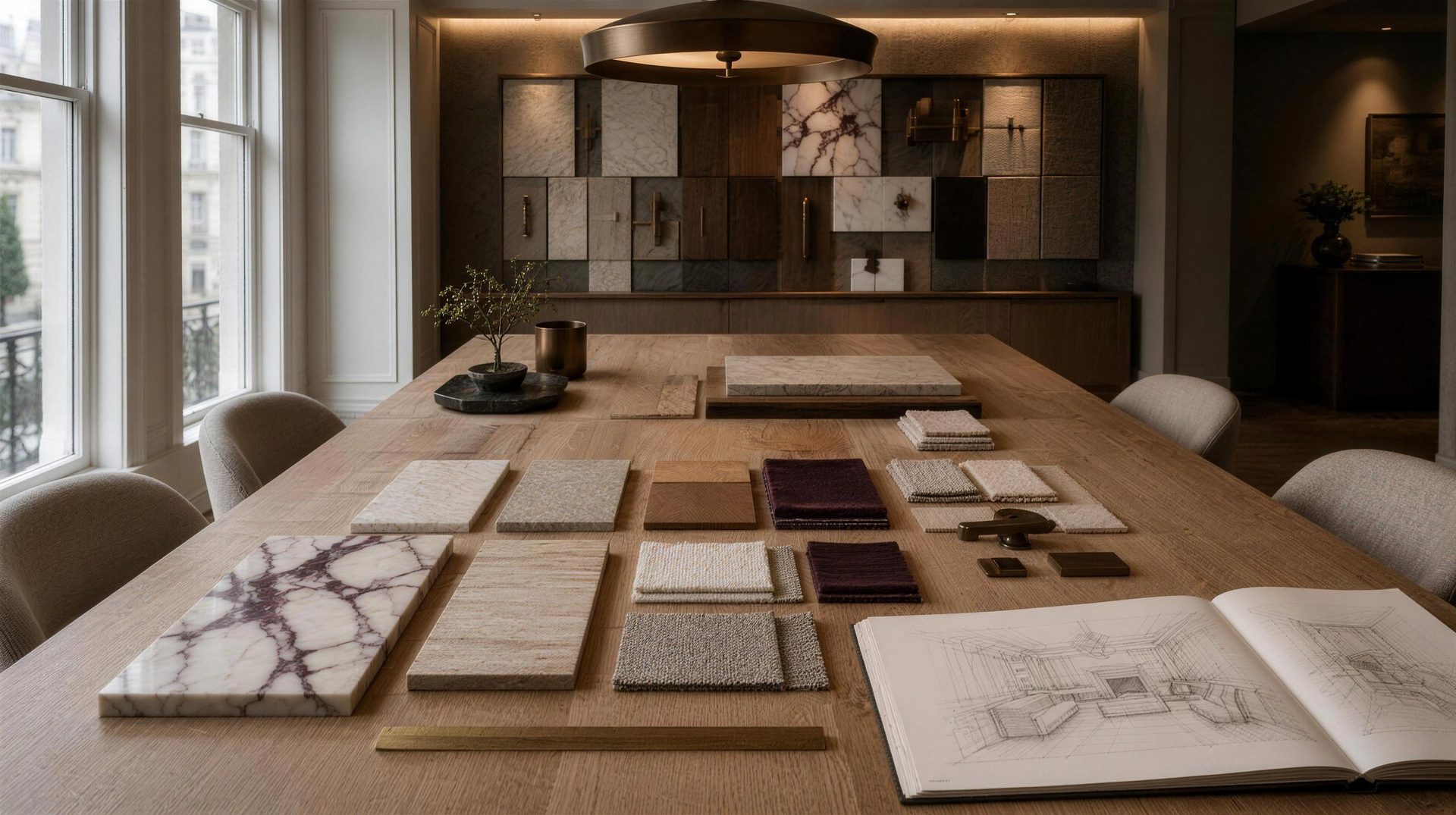
A super-prime house needs an architect, an interior designer, a quantity surveyor, a project manager and a contractor. The question is whether you are making five appointments or one.
Janine and I built the practice on a conviction that procuring these separately, as the industry traditionally does, costs clients in quality, time and money. Today our team of more than forty includes architects, interior designers, project managers, quantity surveyors and site managers. Each discipline takes contractual responsibility for its part of the work.
For an adviser, that matters above everything else. When something goes wrong, and on a project of this scale something always does, there is one party to call and no argument about whose fault it was. Our guide to turnkey design and build explains the model, and how we work sets out the process in detail.
Insist on cost transparency
Advisers are rightly wary of any arrangement where one firm designs, specifies and builds. The answer isn’t to separate the disciplines. It is to insist on transparency.
Our own model is simple: a fixed price or an agreed percentage for design and construction management, every subcontract package competitively tendered, and full visibility of the results. Whichever firm you appoint, that is the standard to ask for. Beware any fee proposal that is vague about exclusions, or a cost plan that looks confident before the brief is truly understood.
Governance for a principal who is elsewhere
Most programme delays are simply decisions waiting in someone’s inbox. Agree at the outset which decisions the adviser can take alone, which need the principal, and how quickly the principal can realistically respond.
Then give the firm a reporting rhythm that lets you manage from a distance: monthly cost and programme reports with a clear list of decisions due, video walkthroughs, and sample boards couriered to wherever the principal happens to be.
Serious firms organise this against a recognised framework such as the RIBA Plan of Work. It sets out stages, outcomes and core project strategies from briefing to use. For principals with particular security considerations, RIBA published a Security Overlay to the Plan in April 2023, and it is worth asking whether the firm works with it.
Discretion is a design discipline
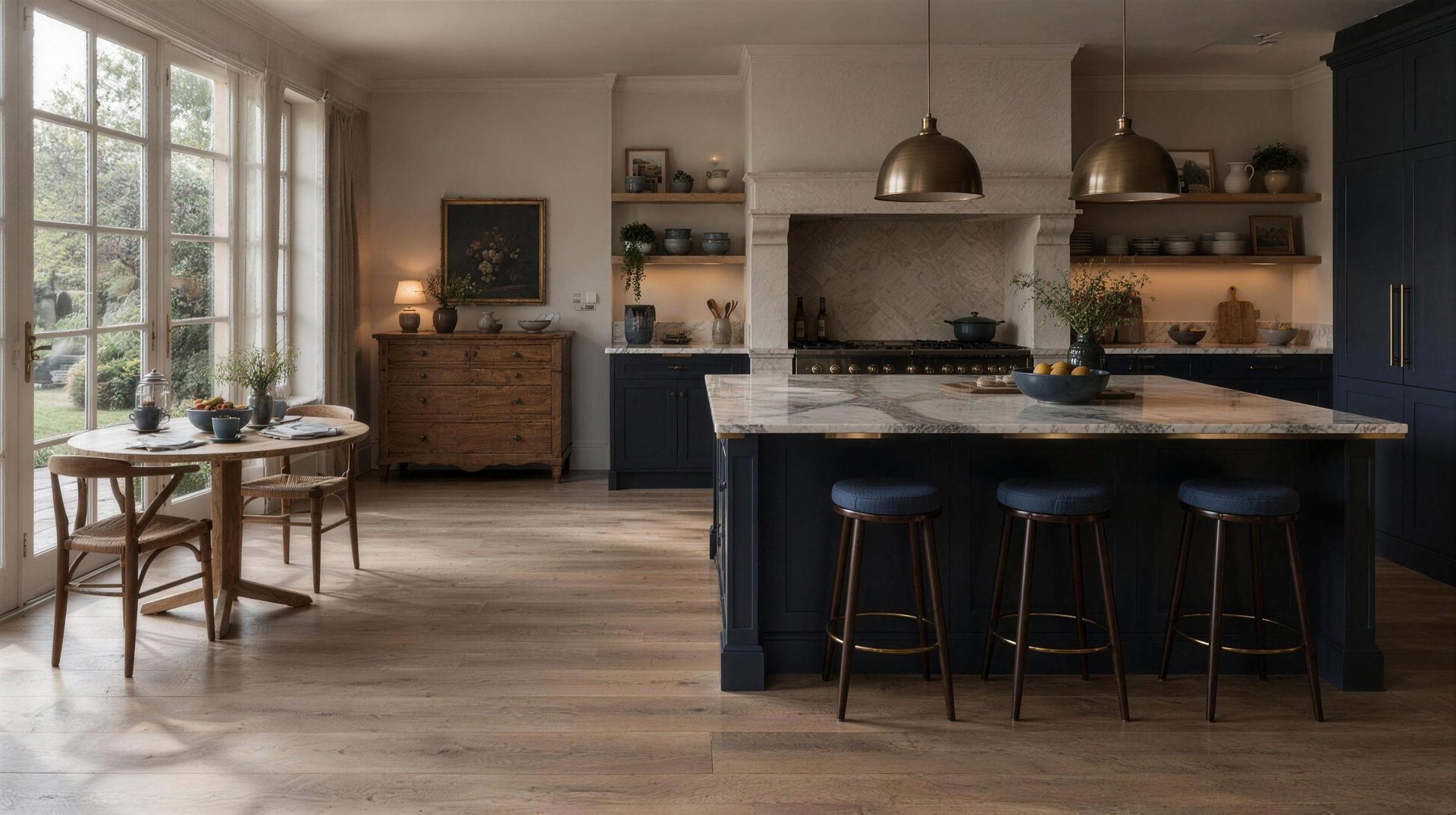
Good firms raise confidentiality before you do. Non-disclosure agreements should be standard, together with a written policy on whether the finished house can ever be photographed, and with whose approval.
Discretion also extends to the site: how deliveries arrive, what the street sees, how the neighbours are briefed, and what happens when an address attracts attention. Ask how the firm has handled this before. Its answer will tell you a great deal.
Brief the life, not the look
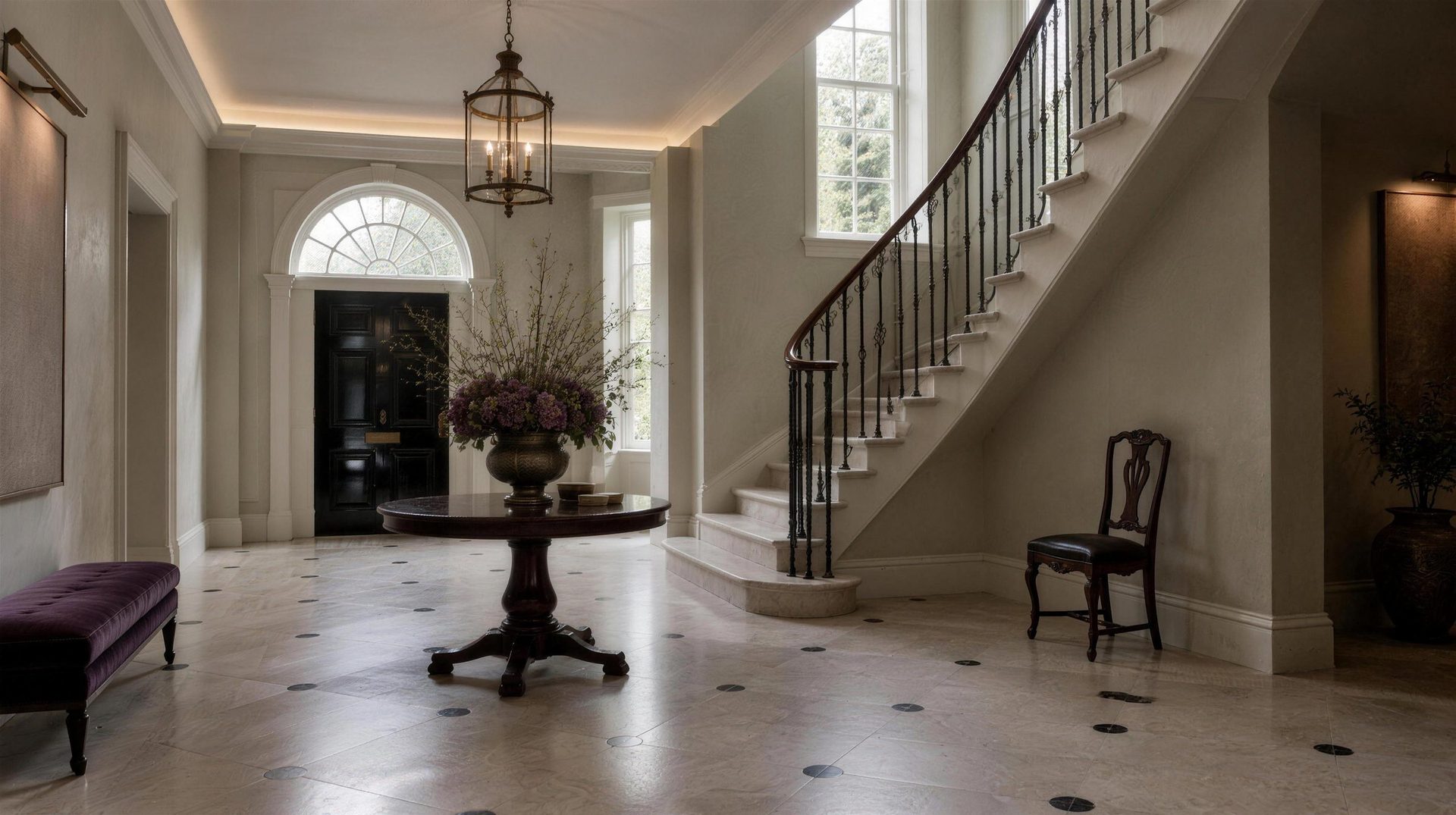
The most important thing any design firm can understand is how the client wants to live. When the principal is rarely in the room, a good firm will interview the adviser in detail: who wakes first, how the household entertains, which staff live in, what arrives by car and what on foot, where the art is going. It should then check those answers with the principal directly.
Be cautious of anyone who starts with a mood board before asking these questions.

Before the house is even bought
The best time to involve a design and build firm is often before exchange. The questions that decide a project’s cost and feasibility usually need answering while you can still walk away: what planning will allow, what a listed building will tolerate (Historic England’s Advice Note 16 is a good starting point), what the neighbours will face.
Our Clarity service exists for exactly this, for private buyers and for the buying agents who act for them.
We are always glad to meet advisers early. The earlier the conversation, the more of the principal’s money it tends to save.
Frequently asked questions
Should I appoint an architect or an interior designer first?
If the works involve structural change, planning or listed building consent, settle the architectural strategy first. Integrate interior design from the start so the plan serves how the house will be lived in. A firm offering both avoids the gap between them.
What is turnkey design and build?
One firm takes responsibility for design, cost management and construction, and hands over a finished, furnished home. For advisers acting for absent principals, it simplifies accountability.
How do I protect my principal’s privacy during a renovation?
Use NDAs across the design team, agree a publication policy in writing, and ask how the firm manages site visibility, deliveries and neighbours.


